
Unpleasant smell? No problem, we’ve got ozone.
We use ozone in:

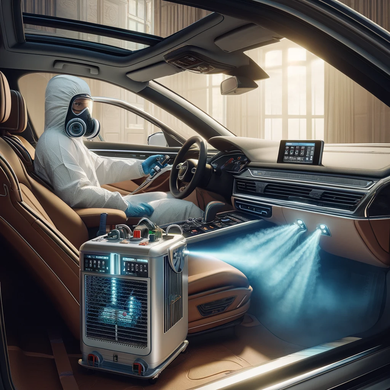
Vehicle interiors

Buildings

Offices
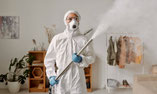
Textiles
Filling systems
Unpleasant odours in clothing, upholstery, mattresses, rooms or car interiors are not only unpleasant to the nose, but can also be a genuine health hazard.
Bacteria, viruses or mould spores are often the cause.
The best way to tackle this is to use
ozone.
Ozone is used to eliminate up to 99.99% of all bacteria, viruses and stubborn odours due to its powerful oxidising effect.
The following areas and items can be treated with ozone:
1. Rooms and buildings
- Living spaces and basements: To eliminate mould spores, musty odours or following water damage.
- Vehicles: Disinfection of interiors and air conditioning systems; removal of pet, smoke or pathogen odours.
- Hotels and offices: Refreshing indoor air and disinfection following cases of illness.
- Special cases: Hoarder’s homes or crime scene cleaning (e.g. in cases of decomposition or urine odours).
2. Textiles and objects
- Clothing and upholstery: Odour neutralisation of textiles that often cannot be washed conventionally.
- Sports equipment: Disinfection of items that are difficult to wash, such as helmets or protective gear.
- Industrial containers: Rinsing of wine barrels (barriques) or stainless steel tanks to kill germs.
- Surfaces: Plastics, glass and ceramics in hygiene-sensitive areas.
3. Water and food
- Drinking water: Disinfection in water treatment plants.
- Food processing: Cleaning of grape presses or bottling lines.
How does it work, and why is ozone used?
1. Radical destruction
- Unlike air fresheners, which merely mask odours, ozone directly attacks the chemical structure of odour molecules. The third oxygen atom in the ozone molecule is unstable; it breaks away and binds with pollutants. This process (oxidation) alters the composition of the molecules so that they permanently lose their odour.
2. Deep-penetrating action and accessibility
As a gas, ozone penetrates areas that cannot be reached mechanically or with wipes.
- Pores in upholstery and carpets: It neutralises deeply embedded particles from smoke, pets or mould.
- Ventilation ducts: In vehicles or air conditioning systems, it eliminates bacterial colonies directly within the ducts.
3. Highly effective disinfection
- Ozone kills up to 99.99% of all viruses, bacteria and mould spores. It destroys the cell membranes of microorganisms (cell lysis), causing them to die instantly. For this reason, it is also used in medicine (e.g. dentistry) and water treatment as an alternative to chemicals such as chlorine.
4. Residue-free application
- A key advantage is its environmental friendliness: after the reaction, ozone breaks down again into harmless oxygen. No chemical residues remain on surfaces, which is particularly beneficial in the food industry or for people with allergies.
Summary of benefits:
Permanent removal of even the most stubborn odours (nicotine, musty smells, smoke odours).
Fast-acting at room temperature without the need for heat or water.
No chemicals: Often replaces harsh cleaning products or disinfectants.
What should be taken into account?
- Evacuation: No people, animals or plants should be present in the room during treatment, as ozone can severely irritate the respiratory tract.
- Material compatibility: Ozone can attack certain materials, such as natural rubber (NBR seals) or base metals, if the dosage is too high.
- Ventilation: After ozonisation, the room must be thoroughly ventilated (often for several hours) until the ozone has broken down back into oxygen.